

Introduction
The post-apocalyptic horror genre has always served as a mirror to human fear, resilience, and moral decay. Among the most influential narratives in this space, the 28 Days Later universe stands apart for its raw realism and psychological terror. The concept of 28 years later: the bone temple represents a powerful evolution of that universe, imagining not just survival after infection, but the complete transformation of human belief systems, social structures, and identity after nearly three decades of collapse. This imagined chapter explores what happens when fear hardens into tradition and survival itself becomes ritualized.
Unlike early post-outbreak stories that focus on chaos and immediate danger, this phase of the world reflects long-term consequences. Humanity has not merely endured; it has adapted in disturbing ways. The idea behind 28 years later: the bone temple is not just about infected hordes or ruined cities, but about how isolation, trauma, and time reshape the human psyche into something unrecognizable.
A World Shaped by Time, Not Just Infection
In the early years of any apocalypse, survival is instinctive. People run, hide, and fight. But after decades, instinct evolves into structure. In the world imagined within 28 years later: the bone temple, civilization has not returned in familiar forms. Instead, fragmented communities exist with their own belief systems, rules, and symbols. The Bone Temple itself is not merely a location but a concept—an embodiment of how humans seek meaning when the old world is irretrievably gone.
Time has done what the infected could not: it has erased memory. New generations know nothing of normal cities, governments, or technology as we understand them. Their reality is shaped by ruins, oral histories, and fear passed down like folklore. In such a world, survival becomes sacred, and death becomes a foundation upon which culture is built.
The Symbolism Behind the Bone Temple
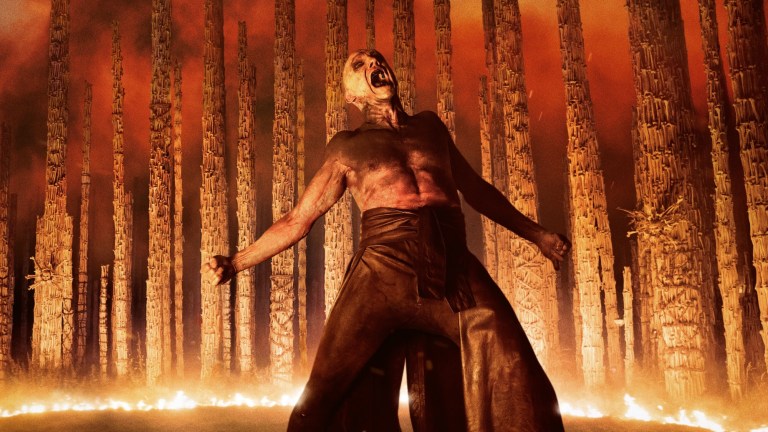
The phrase “Bone Temple” carries deep symbolic weight. Bones represent what remains when everything else decays—flesh, identity, and emotion stripped away. A temple built of bones suggests worship not of gods, but of survival itself. Within 28 years later: the bone temple, this structure symbolizes humanity’s attempt to impose order on endless loss.
The Bone Temple may serve as a gathering place, a warning, or a shrine to the dead. It reflects how people in this world have learned to revere death as much as life. Where once graves were sacred and hidden, bones are now displayed, honored, and used as tools of remembrance and control. This shift illustrates how morality bends when survival becomes the highest virtue.
Evolution of Horror From Physical to Psychological
What made earlier stories in this universe terrifying was speed, unpredictability, and violence. Over time, however, horror evolves. In 28 years later: the bone temple, fear is slower, deeper, and more existential. The infected remain a threat, but they are no longer the central terror. Humanity itself has become unsettling.
Communities enforce rules that seem cruel by old-world standards but logical within their reality. Outsiders are treated with suspicion, compassion is conditional, and sacrifice is normalized. Horror here lies in the quiet acceptance of brutality. The Bone Temple stands as a reminder that fear has become institutionalized, embedded into daily life.
Faith, Ritual, and the Need for Meaning
When science fails and governments collapse, humans often turn to belief. One of the most compelling aspects of 28 years later: the bone temple is its exploration of faith born from catastrophe. The Bone Temple functions as a spiritual center, where rituals replace laws and symbols replace reason.
These rituals may involve honoring the dead, reenacting survival stories, or offering protection against infection through symbolic acts. Such practices are not inherently evil, but they reveal how easily belief can be shaped by trauma. Over time, faith becomes authority, and questioning it becomes dangerous. This reflects a broader truth about humanity: when stripped of certainty, people will create meaning at any cost.

Generational Trauma and Identity Loss
A crucial theme in 28 years later: the bone temple is generational trauma. The original survivors remember the world before; their descendants do not. This gap creates tension between memory and myth. Stories of the past are distorted, exaggerated, or weaponized to maintain control.
Young people born into this world accept the Bone Temple as normal. To them, bones are history books, and rituals are education. The loss of individual identity becomes evident as people define themselves solely by their role within the community. Names, dreams, and personal ambition matter less than survival contribution. This erosion of self is one of the most haunting elements of the narrative.
Moral Ambiguity in a Broken World
Traditional ideas of good and evil no longer apply. In 28 years later: the bone temple, morality is situational. Acts that would once be unthinkable—abandoning the weak, ritual punishment, or selective breeding—are justified as necessary. The Bone Temple stands as a moral compass, but one that points only toward survival, not compassion.
This moral ambiguity forces reflection. Would modern humanity behave differently under the same conditions? Or is this outcome inevitable given enough time and fear? The story does not offer easy answers, instead presenting a world where ethical clarity has dissolved.
The Infected as a Lingering Shadow
Though no longer central, the infected remain ever-present. They are a reminder of why the world changed and why the Bone Temple exists at all. In 28 years later: the bone temple, the infected symbolize stagnation—bodies trapped between life and death, mirroring how society itself is frozen in trauma.
Encounters with the infected are less frequent but more symbolic. They reinforce the idea that the apocalypse never truly ends; it simply becomes background noise to a new way of living. The real battle is no longer against monsters, but against forgetting what it means to be human.
Architecture as Storytelling
The Bone Temple itself is a masterpiece of environmental storytelling. Constructed from remnants of the past—bones, broken concrete, rusted metal—it reflects the fusion of old and new horrors. Its presence dominates the landscape, visible from afar, reminding everyone of the cost of survival.
Within 28 years later: the bone temple, architecture replaces written history. Every structure tells a story of loss, adaptation, and fear. The temple’s design likely evolves over time, growing as more bones are added, making it a living monument to the apocalypse.
Social Control and Power Structures
Power in this world is subtle but absolute. Those who control the Bone Temple control belief, and those who control belief control people. Leadership is not based on strength alone but on interpretation of rituals and traditions. This creates a hierarchy rooted in fear and reverence rather than law.
In 28 years later: the bone temple, dissent is rare not because it is impossible, but because imagination itself has been suppressed. When people cannot envision a different world, they cannot rebel against the current one.
A Reflection of Modern Fears
Despite its post-apocalyptic setting, 28 years later: the bone temple speaks directly to modern anxieties. It reflects fears of societal collapse, loss of truth, and the rise of extreme belief systems. The story suggests that the most dangerous outcome of catastrophe is not destruction, but transformation into something unrecognizable.
This narrative warns that survival without reflection leads to dehumanization. When fear becomes tradition, and tradition becomes law, humanity risks losing the very qualities it struggles to protect.
Why This Story Resonates
The enduring appeal of 28 years later: the bone temple lies in its depth. It does not rely on shock alone, but on atmosphere, symbolism, and psychological tension. It challenges audiences to consider long-term consequences rather than immediate thrills.
By focusing on time, memory, and belief, the story elevates horror into philosophy. It asks whether humanity can survive without losing its soul, and whether some losses are worse than death itself.
Conclusion: Survival at a Terrible Cost
28 years later: the bone temple presents a chilling vision of a future shaped not just by infection, but by human response to it. The Bone Temple stands as a monument to endurance, fear, and the fragile line between order and madness. It is a reminder that survival, when pursued without compassion, can become its own form of horror.
In this imagined world, humanity lives on, but transformed—haunted not only by what it lost, but by what it has become. The story leaves one lingering question: if survival demands the sacrifice of humanity, is it truly survival at all?
Read More:- Ranger Suárez: A Complete Biography, Career Journey, and Baseball Legacy