

Introduction
Nature has a way of surprising people that is very amazing. One of the most beautiful things in nature is a sparkling ocean at night. The bioluminescent beach in India is one of these unique wonders. At night, the sea shines with bright blue light. It looks like the beach has been sprinkled with stars, which makes this amazing scene feel nearly mystical. Bioluminescent beaches are usually found on faraway islands or foreign coastlines, but India too has this unusual and beautiful phenomena, which is becoming a popular spot for nature lovers and explorers.
It may sound like something out of a story, yet a shimmering beach is a real thing that happens in nature because of tiny marine organisms. The bioluminescent beach in India has been a popular topic of interest for vacationers, photographers, and researchers in recent years as more people learn about it and see it. This article goes into great detail about what bioluminescence is, where you may view it in India, when is the greatest time to observe it, and why it is so important to protect this phenomena.
Learning about bioluminescence in nature
Bioluminescence is the ability of living things to make light through chemical processes in their bodies. This happens a lot with fireflies, deep-sea animals, and some types of mushrooms. Dinoflagellates, which are tiny plankton-like organisms, are the main generator of bioluminescence in the ocean. When waves, footfall, or passing boats disturb these microorganisms, they give off light.
This happens on a bioluminescent beach in India when waves hit the shore or when someone walks on the wet sand. Every time you move, you see a quick flash of blue or turquoise light, which makes it look like the sea is alive. The light is safe for people and normally goes away after a few seconds. It comes back when the next disruption happens.
Why Beaches That Glow in the Dark Are Rare
Bioluminescent beaches aren’t very frequent because they need very particular environmental conditions to form. The water must be clean, the temperature and salinity of the sea must stay within a small range, and the concentration of bioluminescent plankton must be high. These fragile habitats can be harmed by artificial light, building on the coast, and chemical runoff.
In India, the number of places where bioluminescence can happen naturally has gone down because of fast coastline development and more tourists. This makes every time someone sees a bioluminescent beach in India highly special and important to science.
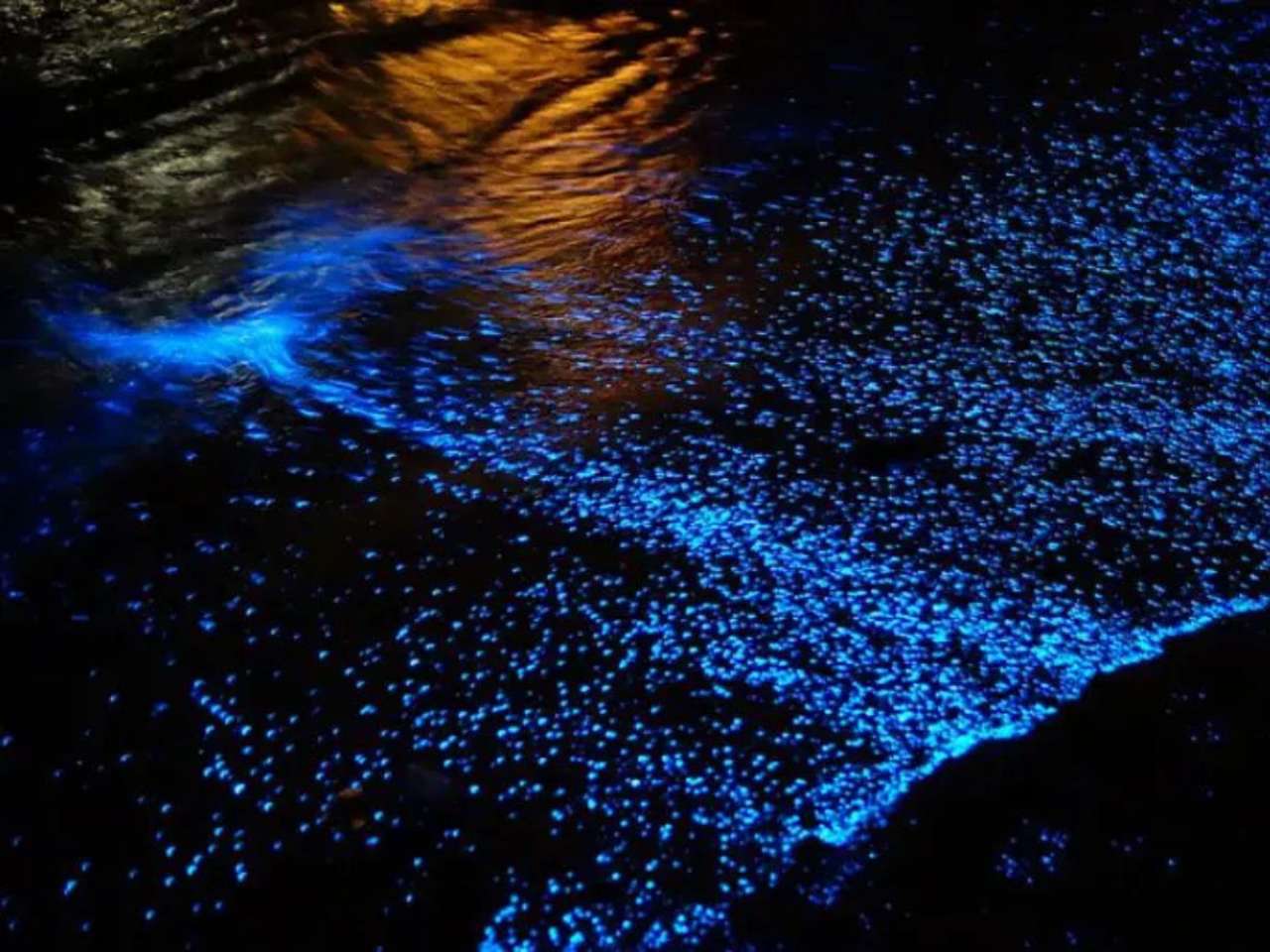
Places in India Where You Can Find Bioluminescent Beach
India doesn’t have beaches that sparkle all the time, but some places have seen bioluminescence happen over and over again when the conditions are right.
The Odisha Coast and Mangrove Areas
Some of the most famous bioluminescent sightings have been on India’s eastern coast, notably near mangrove environments. There are a lot of nutrients in these waters that help bioluminescent plankton flourish. The water surrounding the coast and in shallow areas glows a gentle blue at night, which is a unique experience.
People often say that this area is the best site in India to see a bioluminescent beach, especially during specific times of the year when the weather is consistent.
Things that happen in the West Coast
There have been reports of occasional sightings along India’s western coast, even on secluded beaches where there aren’t many people around. These things don’t happen very often and are hard to forecast, but they have been seen after certain weather patterns, including calm waters after the monsoon. Even though it’s not certain, these places are nonetheless good places to see this natural beauty.
The Best Time to Visit India’s Bioluminescent Beach
When you plan a trip to a bioluminescent beach in India, timing is quite important. This happens most often in the warmer months when plankton blooms are more widespread.
The best conditions are usually:
- Nights that are dark and have little or no moonlight
- Seas that are calm and waves that are soft
- Little pollution and very little artificial light
- Warm water temperatures
Late evenings till midnight are frequently the best times because there aren’t many people around and the setting is quieter. Because bioluminescence is unpredictable, you have a far better chance of seeing it if you stay in the region for more than one night.

The Science of the Glow
A chemical reaction between luciferin and oxygen causes the luminous effect on a bioluminescent beach. When the plankton is disturbed, luciferin combines with an enzyme called luciferase, which makes light as a byproduct. Plankton employ this light to scare off predators as a protection strategy.
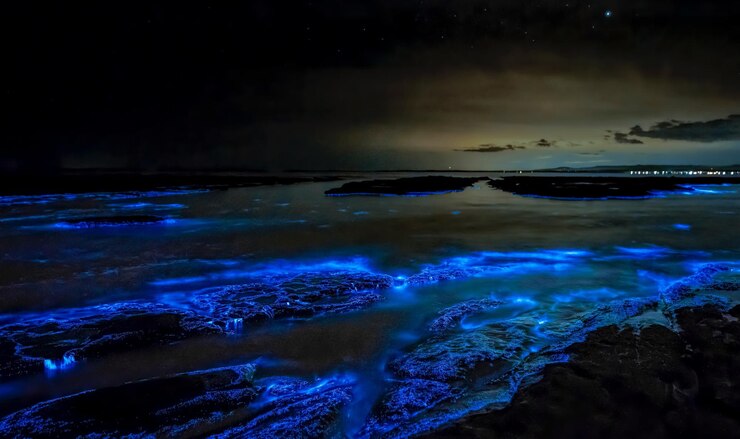
On a bioluminescent beach in India, millions of these tiny organisms shine at the same time, making the effect even stronger and turning the beach into a glowing show. Scientists are still looking at this to learn more about how marine ecosystems work and how the environment evolves.
What it feels like to experience the glow
People often say that seeing a bioluminescent seashore is like something out of a dream. When waves come in, they make shimmering trails on the beach. The coastline lights up for a short time with each stride, making it feel like you’re strolling on a sea of stars. The water moving over your hands can even make glittering patterns.
Seeing a bioluminescent beach in India is a very emotional experience for many people since it connects them with nature in a deep sense. The quiet of the night and the shimmering sea make a moment that seems to last forever.
How to Take Pictures of Bioluminescence
It might be hard but gratifying to take pictures of a bioluminescent beach. You need to use long exposure techniques to capture the glow’s brilliance because it is so faint.
Important tips are:
- Put the camera on a tripod to keep it steady.
- Choose manual settings for your camera
- To let in more light, pick a slow shutter speed.
- Don’t use flash or bright lights.
- Wait and watch how the waves move.
If the settings are ideal, even smartphone cameras with night modes can see the glow. The idea is to keep the natural beauty without harming the ecosystem.
The Environmental Importance of Bioluminescent Beaches
Bioluminescence is a sign of a healthy marine habitat. Plankton can grow well in clean water with the right amount of nutrients and little pollution. But too much pollution and climate change can throw this balance off.
To keep marine biodiversity, it’s important to protect the bioluminescent beach in India. Responsible tourism, proper garbage disposal, and conservation initiatives are all very important for keeping these rare natural beauties safe for future generations.
Traveling and protecting the environment
When visiting sensitive coastal areas, tourists should always be responsible. Don’t throw trash on the ground, make noise, or use bright lights at night. You shouldn’t touch or harvest aquatic organisms because it can hurt the ecology.
Sustainable travel methods make sure that the bioluminescent beach in India stays a natural wonder and doesn’t fade away.
,aspect=fit&q=75)
Cultural and Local Views
People who live near bioluminescent areas typically have legends and mythology about glowing waters. Some fishermen think that the shimmering sea means that the tides are changing or that there are a lot of fish in the area. These cultural interpretations make the experience richer and show how people and nature are connected.
Hearing local anecdotes makes the trip more interesting and helps you appreciate the bioluminescent beach in India more than just its looks.
Bioluminescence in India: Problems and Future
People are becoming more aware of bioluminescent beaches, yet there are still problems. The delicate balance needed for bioluminescence is at danger because of climate change, rising sea temperatures, and pollution along the coast. To keep these ecosystems safe, we need to do conservation work and scientific research.
India might keep and perhaps grow the areas where bioluminescence happens naturally if it manages its environment well.
Conclusion
The bioluminescent beach in India is a rare and enchanting reminder of the amazing things that nature hides. It shows how beautiful tiny life is and how important it is to keep our waters safe. Seeing a shimmering seashore beneath a starry sky is not only beautiful, but it also makes you feel small in the face of nature.
For travelers looking for something out of the ordinary, this phenomena is an amazing experience that goes beyond regular tourism. The gleaming coastlines of India may continue to amaze and inspire people for generations to come as more people learn about them and work to protect them.
Read More:- Sad Poetry in Urdu Text Copy Paste: Express Your Emotions Through Shayari